Patient Profile Name: Bailey Breed: Jack Russell Terrier Female
Age of onset: 9 years old
Condition: Severe skin disease caused by a fungal infection (dermatophytosis)
A Long Road of Discomfort
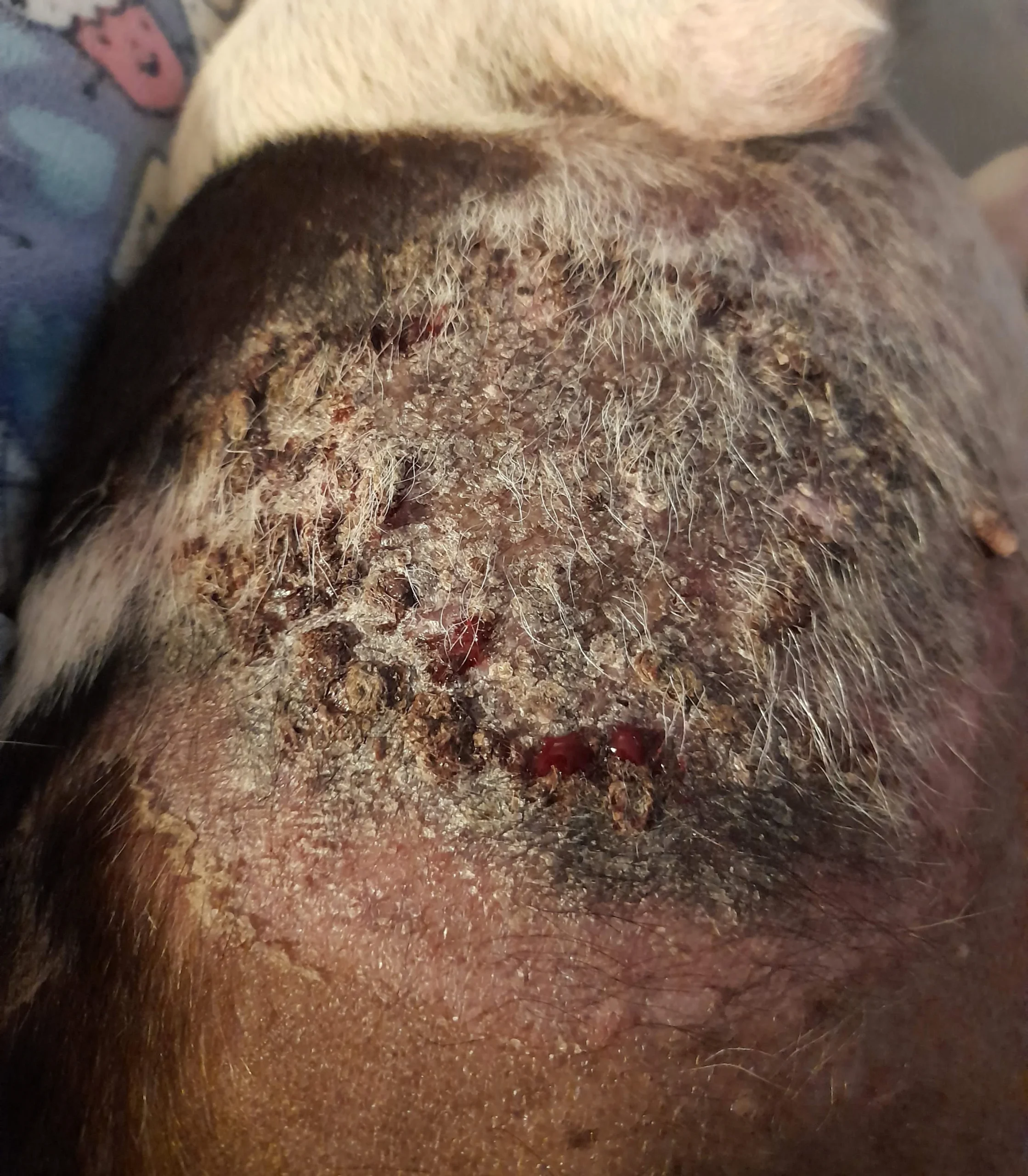
Bailey's chest showing the extent of the conditon
Bailey came to us after more than 14 months of living with severe skin disease. Her symptoms were extensive and distressing:
Intense, near-constant itching (itch score 9/10), especially on her feet and legs
Scabby, bleeding patches of skin with significant hair loss
Ongoing ear infections
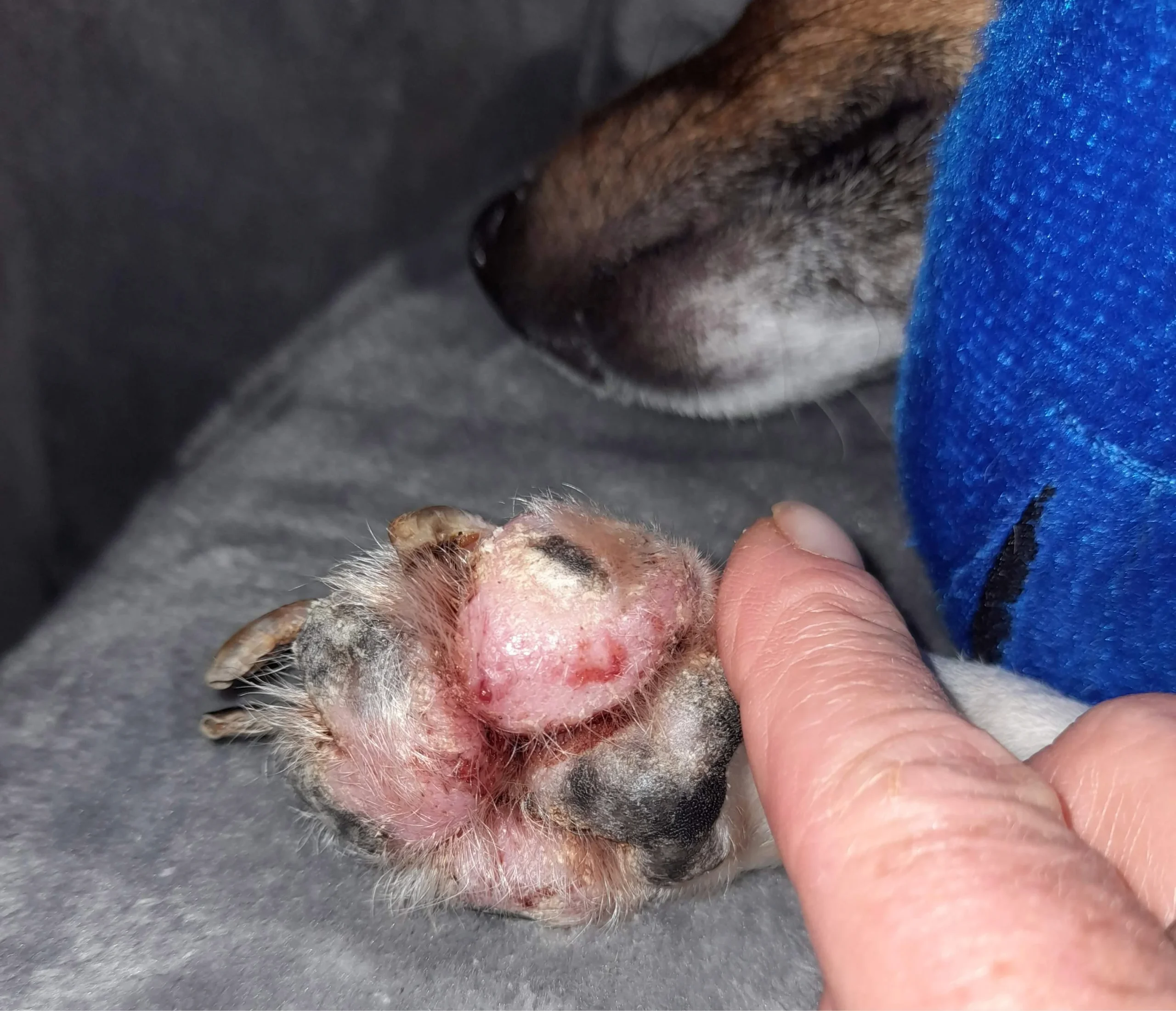
Painful, swollen nail beds and misshapen nails
Despite trying various treatments—including medicated washes, antibiotics, and anti-itch tablets—Bailey’s condition had continued to get worse. She had been wearing a protective collar just to stop herself from causing further damage or traumatising herself.
Bailey's paws were impacted by the condition
Getting to the Root Cause
Bailey was referred to Dr Rachel Caines who heads our dermatology service, where we carried out a full skin assessment under sedation. This revealed:
Thick scabs and ulcers on her left ear
Deep wounds with discharge on her side
Inflammation, scabbing, and abnormal nails on all four paws
We took samples from her skin and ears to examine under the microscope, which showed:
High levels of yeast and bacteria
Signs of fungal infection (hyphae in the hair and skin layers)
A resistant strain of Staphylococcus haemolyticus, a type of bacteria that can be hard to treat
A skin biopsy and fungal culture confirmed the diagnosis: Ringworm (dermatophytosis) is caused by Trichophyton mentagrophytes, a fungus commonly found in soil and associated with wildlife.
Our Case Studies
Our Case Studies
Contact Us Now
Our knowledgable team are always happy to answer your queries, no matter how great or small!
Treating a stubborn fungal infection like this takes time, consistency, and the right combination of treatments.
Antifungal Medication
Daily oral antifungal medication to treat the infection from the inside out
Topical Treatments
Medicated baths twice weekly (later reduced to once a week)
Daily antifungal spray to areas not washed
Antifungal drops were applied directly to the infected nail beds
Monitoring
Routine blood tests to check liver health during treatment
Regular re-checks and skin sampling to monitor progress
A Remarkable Transformation
Thanks to months of steady treatment and her owner’s dedication, Bailey showed dramatic improvement:
The itching stopped completely
Her skin lesions healed, and the scabbing disappeared
Most of her coat regrew, and her skin returned to normal
Only minor nail bed changes remain
Best of all, Bailey no longer needs a collar and is back to her happy, comfortable self
Bailey after her course of treatment
Bailey after her course of treatment
A Message to Other Pet Owners
Bailey’s story highlights how important it is to dig deeper when a pet’s symptoms don’t respond to the usual treatments. Fungal infections in older dogs are uncommon, but they are treatable with the right diagnosis and plan.
If your dog is suffering from chronic skin problems, don’t give up. We’re here to help find the cause and work towards real relief, just like we did for Bailey.
You can explore more about animal dermatology by visiting our dermatology hub via the link below: